


BLADE FREE LASIK ADVANTAGES
Safety
- Blade free (All-Laser) procedure
- 100% disposables to ensure minimum risk of infection
- Enhanced safety, precision and predictability of the procedure
- Thorough preoperative evaluation and stringent patient selection to ensure Safety
- Reduced risk of dry eyes and vision threatening complications
Vision
- Thorough diagnosis for enhanced preoperative planning
- Enhanced quality of vision
- Customized surgery for each eye for superior night vision
- Wide range of treatable numbers (Myopia upto -12 D, Hyperopia upto +6 D, Astigmatism upto +6 D)
Results
- Precise and predictable results
- Quick recovery
- Minimized chances of regression
HOW IS BLADE FREE LASIK SAFER?
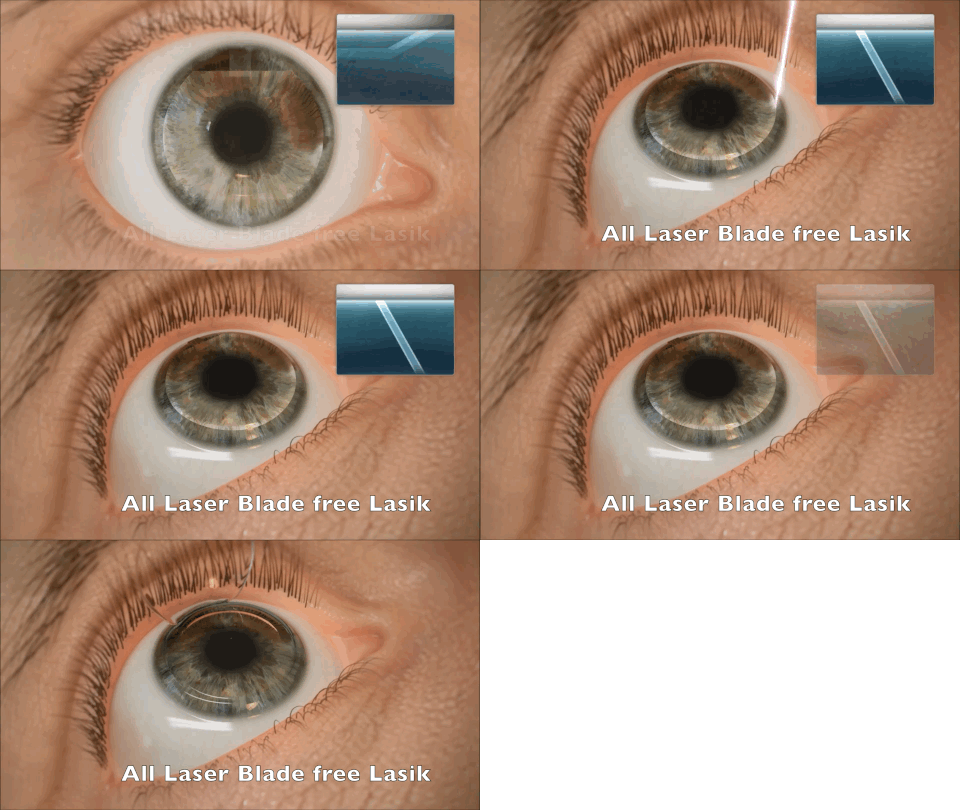
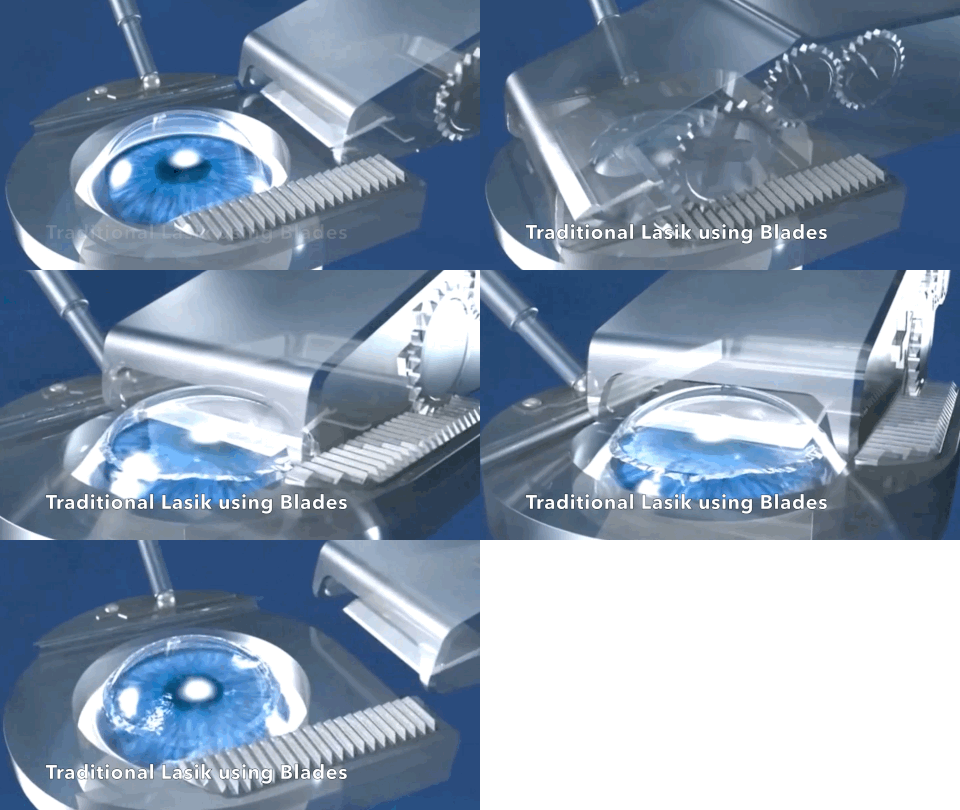
| Blade free Lasik | Lasik using Blade | |
|---|---|---|
| Method for flap creation | Computer controlled advanced femtosecond laser |
Mechanical blade (Microkeratome) |
| Accuracy of flap creation | Micron level precision | Variable precision |
| Optical quality | Smooth flap interface which reduces optical abnormalities |
Mechanical blade can cause irregular interface causing optical abnormalities |
| Chances of complications during surgery |
Negligible | ‘Buttonholed’ or partially formed flaps, corneal scars, flap tears |
| Chances of post surgery complications |
Lesser possibility of dry eyes, better night vision |
Higher possibility of dry eyes, inferior night vision |
| Surgery related infections | Negligible | Possible, because of reuse of blades |
| Customized surgeries | Very precise | Less precise |
| Customization of corneal flap | Customizable depth, size, shape and position | No customization possible |
| Corneal flap | Precise, because of the increased control over the shape, size and position of the flap |
Chances of visual distortions because of improperly formed flaps |
| Results | Precise results and clear vision | Chances of distorted vision and eye infections |
| Who can be treated? | Patients with thinner corneas can also be treated easily |
Difficult to treat patients with thinner corneas |
THE DISEASE
At the Lasik Clinic, utmost care is taken to ensure patient safety and consistent results. That’s why we use advanced technology to minimize the chances of damage to the vision. The approach at the lasik Clinic combines the Advanced Blade Free Femtosecond Laser, tissue sparing and fastest Excimer Laser, a thorough pre-operative diagnosis and the use of single use disposables for the surgery.
Thorough Pre-op Diagnosis
The lasik process begins with a series of diagnostic tests and examinations. Based on these tests, the surgeon decides if the patient is a suitable candidate for the Lasik. These tests also assist the surgeon in properly planning the surgery according to the patient’s eye and lifestyle requirements.
Use of Single use Disposables
We ensure that we only use single use disposables during the surgery. This eliminates any risk of infection in the eyes and also improves the efficiency of the surgery
Globally Awarded Doctors
For Lasik surgeries, the skill of the surgeon is as important as the technology being used. The Lasik team at VED comprises of internationally trained eye surgeons who have received numerous awards and accolades for their contribution to the field of eye care.
AT OUR SETUP
The patient undergoes a comprehensive eye exam to check the overall health of the eyes. These tests include detailed optical maps and biometric testing of the eyes from wavefront scans and corneal tomography. Based on these results we determine whether or not the patient is a suitable candidate for Lasik to ensure safety of the eyes. Thereafter, the patient undergoes customized laser vision correction using the advanced blade free femtosecond laser. This eliminates the use of mechanical blades and makes the procedure much safer. Additionally, we use the tissue sparing fastest excimer laser to ensure corneal safety. After the procedure, the surgeon and the counselor continue to meet with the patient for post-operative testing and follow-up care.
FAQ
A refractive error is a common eye disorder which is observed very often. It occurs when the eye cannot clearly focus the images from the outside world. The result of refractive errors is blurred vision, which is sometimes so severe that it causes visual impairment. It is disease which can’t be prevented but can be diagnosed.
The four most common refractive errors are:
- myopia (nearsightedness): difficulty in seeing distant objects clearly;
- hyperopia (farsightedness): difficulty in seeing close objects clearly;
- astigmatism: distorted vision resulting from an irregularly curved cornea, the clear covering of the eyeball.
- presbyopia: which leads to difficulty in reading or seeing at arm’s length, it is linked to ageing and occurs almost universally.
LASIK stands for laser in situ keratomileusis, which means using a laser underneath a corneal flap (in situ) to reshape the cornea (keratomileusis). This procedure uses a highly specialized laser specially designed to treat refractive errors, improve vision, and reduce or eliminate the need for glasses or contact lenses. This laser procedure alters the shape of the cornea and makes the vision clearer.
A specially trained and experienced eye surgeon first creates a precise, thin hinged corneal flap using a microkeratome. The surgeon then pulls back the flap to expose the underlying corneal tissue, and then the excimer laser ablates (reshapes) the cornea in a unique pre-specified pattern for each patient. The flap is then gently repositioned onto the underlying cornea without sutures.
Refractive surgery is not for everyone. In addition to this if you wish to undergo lasik surgery you need to go for a complete eye exam to find out if you are a candidate for surgery.
For most candidates, LASIK surgery usually involves little pain and recovery is rapid. Other benefits may include:
- LASIK can correct a wide range of refractive errors including nearsightedness, farsightedness and astigmatism of varying degrees.
- LASIK can be repeated to correct the vision further.
- The eyes stabilize within three months after LASIK surgery.
- The eye is not structurally weakened.
- LASIK usually causes little or no scarring of the cornea.
- Post-operative care is usually limited to using eye drops for a week after surgery.
The blade free Lasik is much safer compared to ordinary Lasik because eliminating the use of blades also eliminates the risk of vision threatening scars, ‘Buttonholed’ or improperly formed corneal flaps and post surgery complications like dry eyes.
Using disposables for surgery eliminates any chances of infections or contamination during of the surgery. The use of single use disposables also increases the efficiency of the surgery. That’s why we emphasize on using only single use disposables in all our surgeries.


